
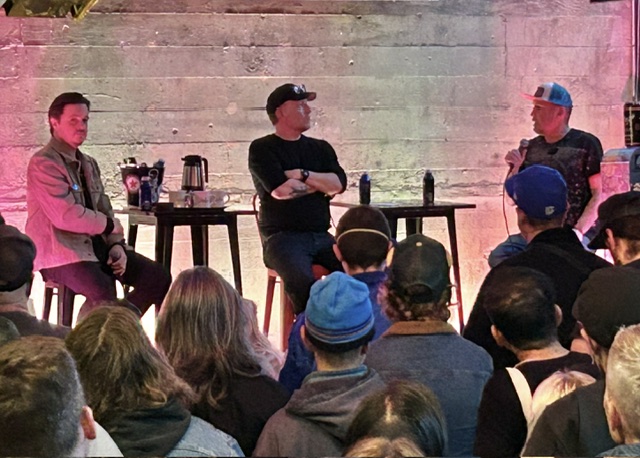
 (from left to right: Barry Ament, Lance Mercer, Jeff Ament)
Story, photos and video by Jason Grotelueschen
Reporting for West Seattle Blog
It was a packed house at Easy Street Records on Monday night, as Pearl Jam legend Jeff Ament and his brother Barry Ament were on-hand to celebrate their newly released photography book “Since Forever.”
The discussion was moderated by esteemed Seattle photographer Lance Mercer, himself an early fixture in the days of the region’s exploding music scene. The trio shared stories and anecdotes and described the book as a rare look into Pearl Jam’s rise and career as well as the formative years, told through previously unpublished rare photographs and personal memories.
The brothers are accomplished visual artists, with Jeff being a lifelong photography enthusiast and artist credited for much of Pearl Jam’s visual style, and Barry being a co-founder of Ames Bros and one of the most respected poster artists in modern music.
Here’s a video snippet of Monday’s conversation.
Easy Street owner and longtime Pearl Jam supporter Matt Vaughan kicked off the evening by welcoming the crowd and acknowledging the timing of the Seattle Seahawks’ Monday Night Football matchup against the Chicago Bears (playing on the big screen behind the stage, and amplified by the “GO SEAHAWKS” message on the store marquee outside):
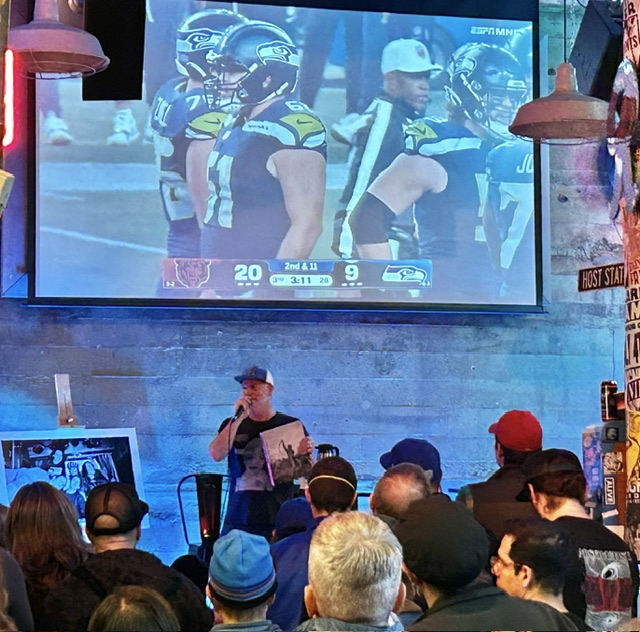
The Ament brothers jokingly lamented that they’d be boarding a plane the next day “with a bunch of Bears fans” to travel to Chicago for a scheduled book event happening Wednesday. The brothers also appeared last Thursday at Seattle’s Town Hall.
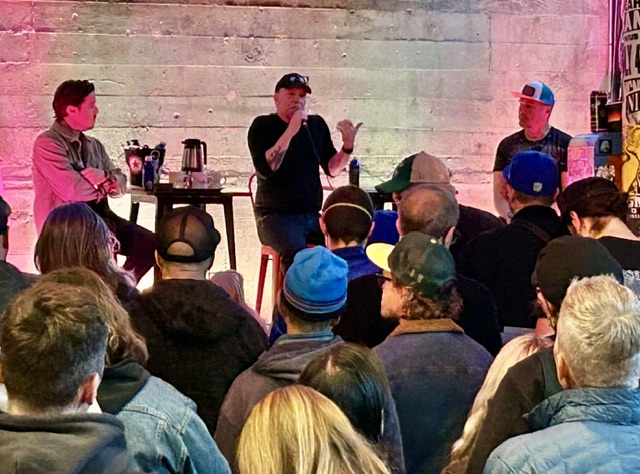
Mercer (speaking at center, below) facilitated the discussion as he and the brothers took the stage to talk about the Pearl Jam art process, the Seattle music scene’s collaborative do-it-yourself ethos, and the making of early album art. The brothers also talked about why those early bands hired their friends to do so much of the supporting work, and detailed how the book was compiled, edited, and designed:
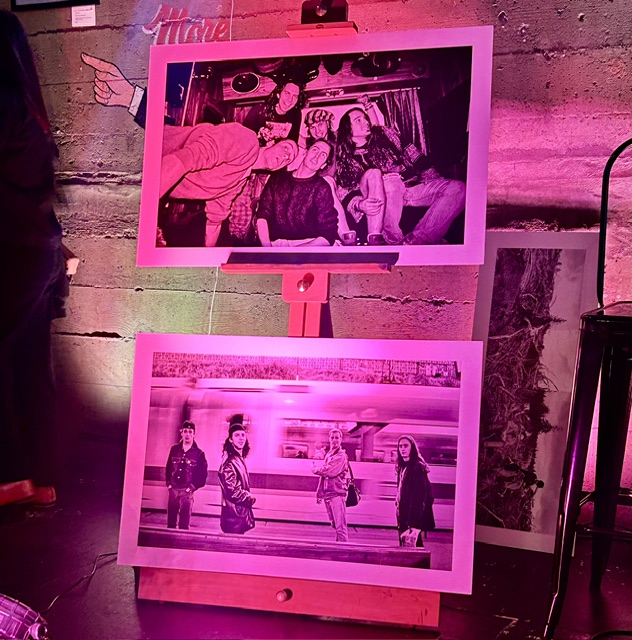
The stage was decorated with some selected images from the book, which they discussed and shared stories about:
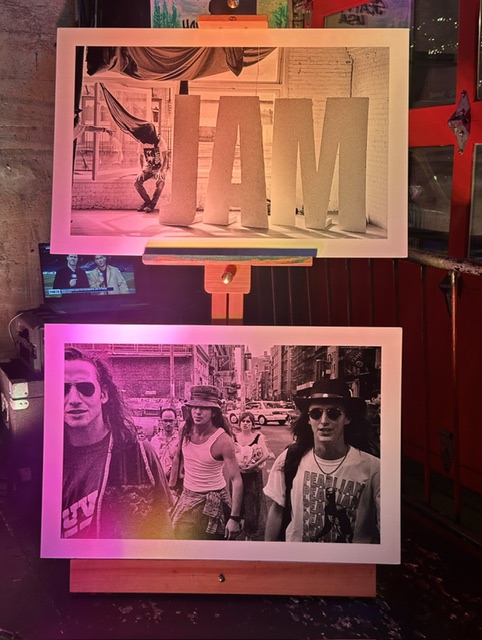
Some notes and themes from the conversation:
Pearl Jam’s visual identity grew from Seattle’s communal art scene and a do-it-yourself approach built on trust. Friends became longtime collaborators, designers shared their experiences with each other. Jeff said that he always encouraged Barry’s creative work (the brothers grew up in Montana). Keeping photography and design in-house reduced the musicians’ reliance on expensive outside talent and protected creative control. Pearl Jam’s record label had pushed for alterations to the album Ten’s cover, which reinforced the group’s DIY resolve, and helped drive the stark Olympic Peninsula imagery for their second album cover (Vs) which reflected the band’s darker, more chaotic phase.
From a photography perspective, Jeff’s access to the band and his unobtrusive shooting style (no camera strap) captured Pearl Jam’s private world. Using a fisheye lens and holding the camera very low, he photographed reluctant bandmates and continued documenting them for internal use and the fan newsletter, during times when outside photographers were restricted. The trio discussed images including band members, their first New York trip, winter bus rides in the Midwest, a European train platform, and baseball during the Vs sessions. Jeff said that the Vs time period wasn’t a very healthy one for the band, but that looking back at the images reminded him of the sometimes hidden camaraderie and humor.
The brothers said that creating the book took about four years, drawing on roughly 15,000 images from Jeff’s photographs and Barry’s preserved archives. Work involved lots of in-house, camera-based scanning to protect the originals, while intensive editing shaped the selection of the pictures. A journal-inspired design evolved into simpler layouts, subtle handmade details, and direct writing and storytelling that complemented the photographs. The process of cutting down the number of images and “adding breathing room” resulted in the book ending up at 270 pages. The brothers said that looking back on those images, especially the first seven or eight documented in the book, helped deepen their gratitude for the early years. They also rediscovered images from many other Seattle-scene musicians, including Chris Cornell and members of Mother Love Bone.
Barry said he continued working with the band through his Ames Bros company, co-founded with Coby Schultz, and a poster program that grew from just a few shows in 1995 to doing posters for every show. Their creative freedom remained balanced, with respect for band members’ boundaries. The discussion closed as the brothers reiterated a true “team” philosophy rooted in small-town life and pickup sports (especially basketball, for Jeff) which allowed them to elevate the process, set ego aside, and serve the work—even when that means stepping back and letting things happen.
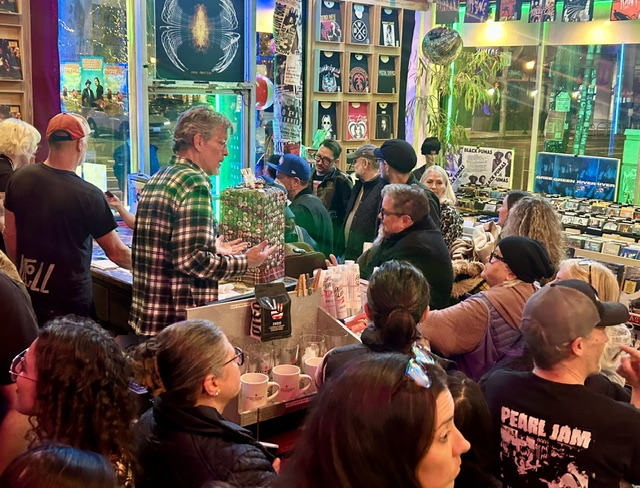
As the discussion wrapped up and the facilitators thanked everyone for coming, attendees lined up to get pre-ordered copies of the book, signed by Ament:
As of immediately after the event, Easy Street still had signed books available, in very limited quantities, for sale in the shop.