
Story and photos by Anne Higuera
Reporting for the West Seattle Blog
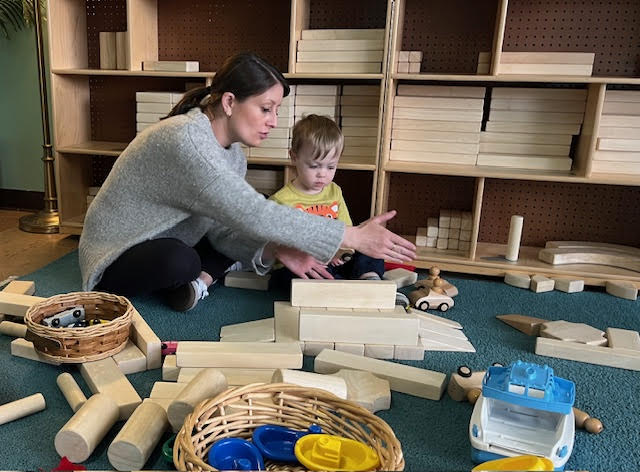
In the corner of an upstairs playroom at Tibbetts United Methodist Church, a parent is sitting on the floor surrounded by building blocks, talking with a small child. It looks like any other preschool, but this is actually a Parent Education classroom, a lab for a West Seattle cooperative preschool whose focus is to teach not just the kids, but everyone involved, and primarily the parent-students, who are enrolled at South Seattle College. This cooperative parent-education model has taught generations of students and children—hundreds of thousands across Washington since the 1940s—but a crisis is now looming. If a solution is not found, most programs will have to close at the end of June, including five preschools in West Seattle, because of a change in the way that community and technical colleges will be required to allocate their funding starting this summer. We told you last week about some initial advocacy efforts by the West Seattle co-ops to retain their funding, but to understand what’s at stake, and why this long-standing program is so unique and so beloved, there’s a lot more to know and some acronyms to learn.
How does it work and where did the money go?
Parent Education programs look slightly different at all 16 of the state colleges that have one, and 3 of them don’t even have a co-op preschool. Comparing two in close proximity: At North Seattle College, there are tenured professors in addition to teachers and students. At South Seattle, the college pays a coordinator and Parent Educators. There’s also a non-profit that runs each individual preschool site, paying preschool classroom teachers who work with parents enrolled in the college’s parent education classes. Those parents are assistant teachers in the classroom. State enrollment funding goes to pay the Parent Educators through the college and to offer the Parent Education classes, for which enrolled parents get college credit. Tuition waivers allow the parents who are students to pay less for classes to help offset the cost of lab fees at the co-op preschool where their child is enrolled. Some colleges have their Parent Education curriculum structured as a certificate program; neither South Seattle or North Seattle have this option.
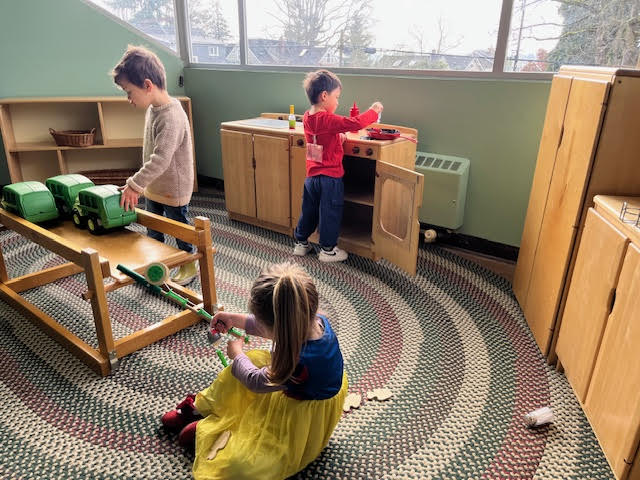
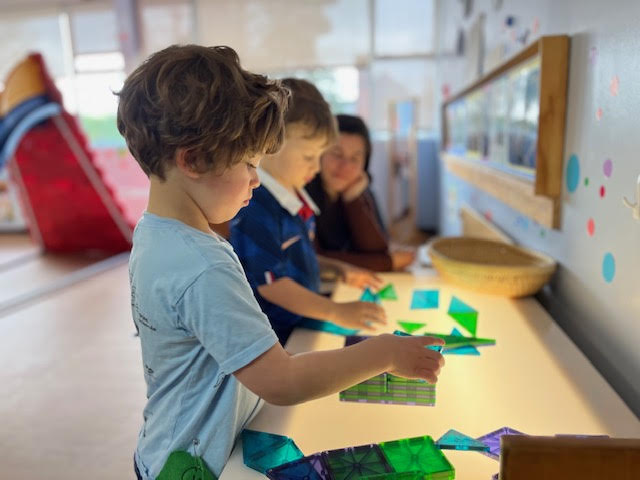
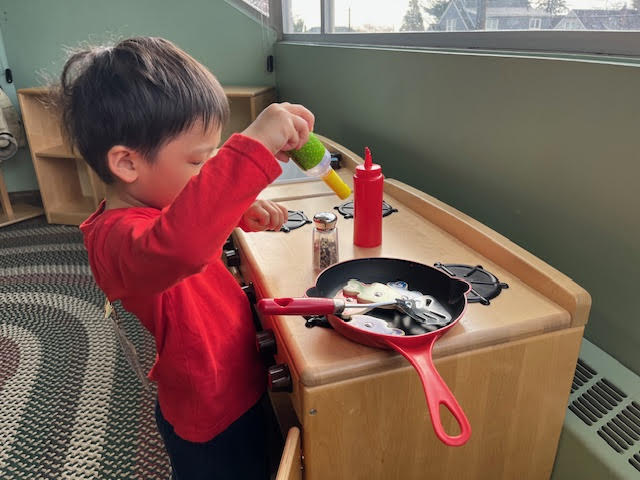
(All photos from South Seattle College Cooperative Preschool Admiral location)
Over an extended time, the variability in the program structures across the state and lack of a path toward a degree has not been a big issue. That changed last summer when the State Board of Community and Technical Colleges (SBCTC), after a multi-year process, voted to change their allocation model, which determines how to decide which programs get funding. They voted to change the model to focus enrollment dollars on workforce development and credentialed programs. Applying the model this year means the Parent Education classes at 10 of the schools will not qualify for funding starting July 1, and the six schools that have certificate programs in Parent Education now have to become a credentialed program to keep their funding. “To become credentialed, these CTCs [Community and Technical Colleges] must submit required program approval materials … to show their Parent Education Program has workforce outcomes,” says the SBCTC board’s Communications Director Rachelle Alongi. She says they have until the end of June to get their paperwork approved.
The effect of the allocation model change on Parenting Education programs blindsided even those parent educators in regular touch with the SBCTC board. The board has a work group called the Organization of Parent Education Programs (OPEP) that meets quarterly with board staff. “Never once in 2 years did SBCTC say, ‘Hey, work group, we are going to change the allocation model, essentially defunding your 4,500 students across the state, so start looking for another way to pay for yourselves,’” says OPEP President Jen Giomi, who is also South Seattle’s coordinator. “They didn’t officially meet with OPEP until February and programs will be closed by June 30th.”
While following the new allocation model means the parenting programs as they exist today won’t be funded, Alongi stresses that the state board sets policy, while each community and technical college makes the ultimate decision about their offerings. “CTCs budget locally and determine the best way to use the funding that SBCTC allocates to them. We don’t allocate funds for programs or make decisions to cut programs.”
Giomi says communication was poor about all of the impacts of this funding change. “When college presidents voted for this new model, it seems, through conversations with program coordinators across the state, that most presidents didn’t understand that Parent Education would not receive money,” Giomi says. “[SBCTC says] they aren’t closing PE/Co-op programs. Colleges are still free to offer them. But if there’s no money attached to pay Parent Educators, most programs will close.”
Alongi says the SBCTC remains ready to work with colleges as they all adjust to the new allocation model that the board approved. “We will continue to work closely with CTCs, help programs meet established requirements, and provide funding that aligns with state policy standards—reflecting our shared commitment to education and supporting communities.”
What makes the co-op model different
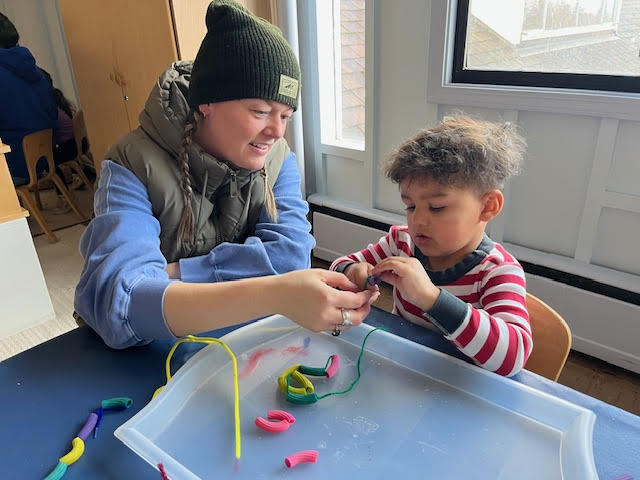
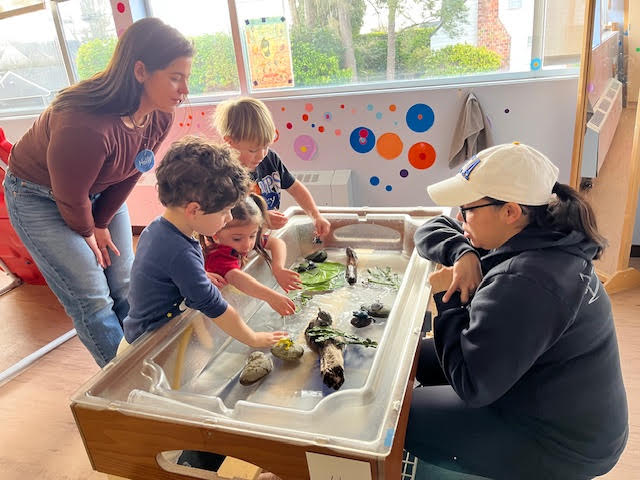
At South Seattle’s Admiral co-op location, the first thing you might notice is that there are adults everywhere–at least one in every room, and interacting with one or more kids at sensory tables, building things, playing in a kid-size kitchen, looking through magnifying glasses. That’s because in addition to paid classroom teachers, part of the parents’ curriculum is being an assistant teacher in their child’s classroom one day a week, which is considered a lab in the parent education class. It’s the first of four requirements for the students.
“I love being in the classroom,” says Holly Stagg, who is in her 5th year in co-op, with her second child in the program. “I had instant admiration for the staff, parents, the community that it brought. Developing a sense of community was really important. It really helped me feel like we put down roots in West Seattle when we were new to the neighborhood.”
For the rest of the requirements, parents attend a monthly parents-only meeting with discussions about everything having to do with parenting—-child development, behavior and more. There are also required seminars quarterly on a variety of topics. If parents have questions or need feedback, help is right there. “The Parent Education program is the reason that we stayed,” says Stagg. “The monthly meeting where we meet as parents and families keeps me accountable as a parent, be a better parent, be a better person.”
Finally, each enrolled student commits to a job that helps make the preschool run. That could be a variety of things, from being a play dough maker or librarian to serving on the board of the non-profit that runs each of the preschool sites. Teacher Becca Allison signed up for the program nine years ago because of the way the program is structured and for the parent education, which she says cut through the noise of all of the opinions online and elsewhere. “Having one trusted source–that was a big deal,” she says. “The parent education is what sets us apart from so many other preschools. I’ll plan to stay for as long as they’ll have me. It is my favorite job that I’ve ever had.”
There’s that word “job” again. Clearly, this program is a job creator, with positions in the program often filled by parents who started out as students. But parenting itself, which anyone who has had kids will generally agree is a job, and an important one, is not workforce creation in the eyes of the state. Jen Schill, who is one of 11 Parent Educators for South’s preschools in West Seattle, says it puts these programs in a place where they have to, “prove that there’s a capitalist outcome,” when the value is in what she calls intangibles: “the connections and community that gets built. It’s a life-changer.”
OPEP, the work group for the parent education program, draws the lines between these cheerful classrooms and real-world outcomes when parents are taught best practices for parenting:
Improved child development and school readiness
Reduced child abuse, neglect and family violence,
Better parental mental health and family stability
Long-term economic benefits
Cost-effectiveness compared to remediation
“It’s such a valuable program for families and for children,” says Stagg. With the possibility of the program closing by mid-year, she says there’s a financial worry on top of the possibility of losing this community hub. “Affordability is huge. i don’t know where I would be able to send my child. We’re all really worried—-it would be devastating for the families. This is our beloved co-op.”
Advocacy efforts
The possibility that Parenting Education programs will stop at the state colleges and technical schools has current and former co-op students and staff at many schools trying a number of things to avert closure, though Bellevue College has announced their program will definitely close this year. Giomi says their primary push is to ask that the SBCTC, “defer applying the new allocation funding model to Parent Education and associated Cooperative Lab Preschools for at least 1 year. There are lots of avenues to find funding, but it can’t be done in the 2 1/2 months that we’ve been given.” Other efforts include new state legislation to fund the programs (though that couldn’t happen until the 2027 session), grants and other fundraising. The West Seattle Co-op points to ways the community can get involved on their website.
The fundraising effort is being focused around a campaign called “It Takes a Village,” which will kick off on April 4th at the Phinney Ridge Association hall. A community meeting with Senator Rebecca Saldaña and educators is at 10am, followed by a press conference at 11 with Mayor Katie Wilson, educators and Mary’s Place. The goal with “It Takes a Village” is to raise $2 million by May 14th to keep the programs at North Seattle and South Seattle open for one more year until permanent funding can be secured. The two programs serve 2,100 families.
There is also a rally planned for April 9th at South Seattle College, where the SBCTC is coincidentally having its bi-monthly meeting. The invitation: “Join educators, families, and community members to make a public statement about the value of co-op preschools and parent education programs. Your presence helps show college leadership and legislators that these programs are essential to families and communities across Washington.” The rally starts at 8am at Cascade Hall.
As students and teachers plan out the final weeks of this school year at South Seattle College’s co-op preschools at Admiral, Alki, Lincoln Park, White Center and South Seattle, they are looking nervously ahead. With preschool enrollment already nearly full for next fall, Schill is worried, but hopeful that the advocacy work being done now will make a difference. “We have 5 trains on the track and hoping at least one of them reaches the station.”