
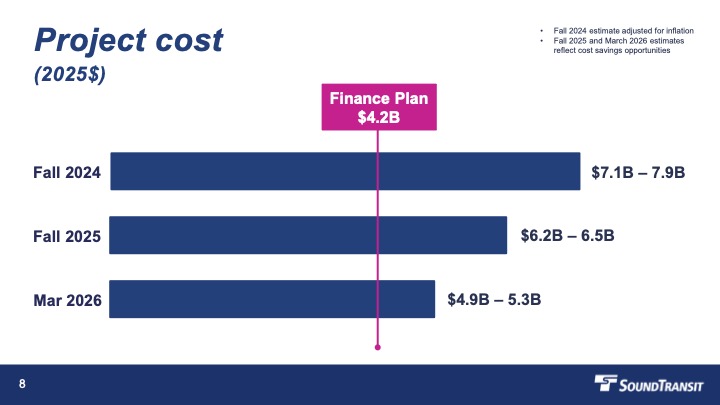
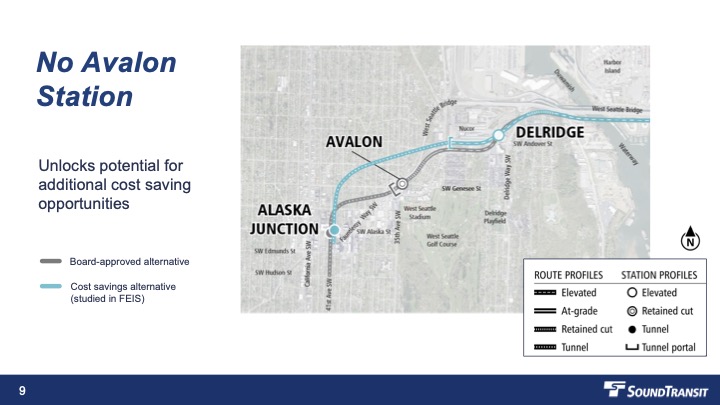
2:07 PM: In a presentation prepared for today’s Sound Transit Board System Extension Committee – meeting right now – ST staff says they can get the West Seattle Link Extension light-rail price tag down as low as $4.9 billion. The proposal would include three major components – first, dropping the Avalon station:
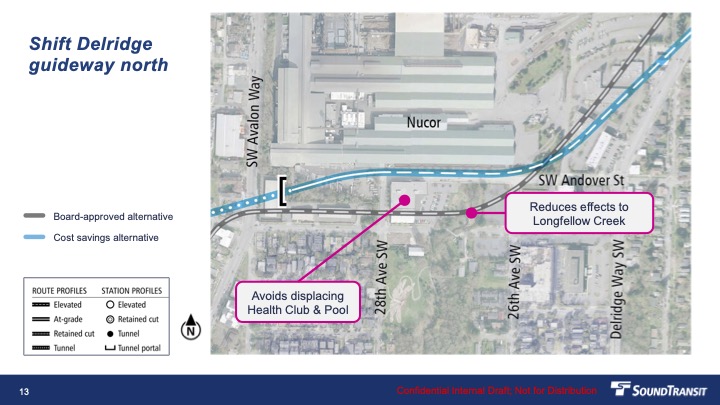
Then the Delridge guideway would shift northward, sparing West Seattle Health Club and reducing effects on Longfellow Creek:
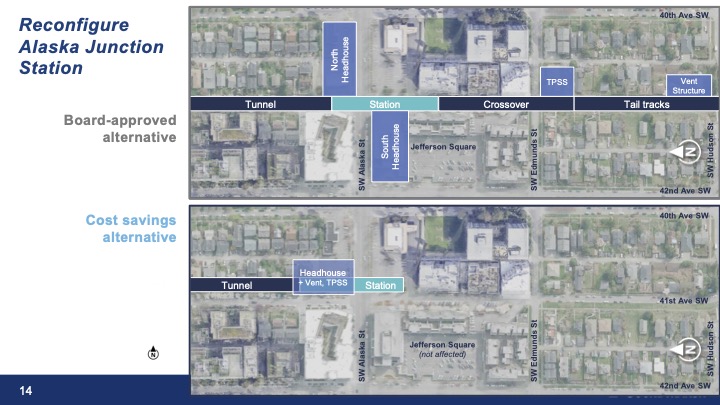
And the Junction station would be smaller – sparing Jefferson Square:
We’re monitoring the committee meeting remotely and will update as they discuss this (no votes are planned today, this is a briefing) – if you want to watch live, the link is in the agenda.
2:17 PM: The briefing, led by ST’s Brad Owen, is beginning, starting with a sheaf of background. Owen says “independent cost verification” has validated their projections. ST’s Jason Hampton, WS project director, then takes over. He says some of the smaller cost-cutting measures can just be incorporated into the design process, such as right-sizing Duwamish River guideway components. Those are the first level (“lever”) changes. In the second “lever,” they’d include various technical changes and also “removal of the tail track” so the “crossover” could be in front of the Junction station.
2:26 PM: Hampton gets to the Avalon station cut, which would be a “lever 3” – requiring board approval – decision. That means less impact on the southwest side of Avalon, for example, and a tunnel portal on the east side of Avalon. The reduced effects on Longfellow Creek would mean most significantly, “no over-water” passage of the track. The Junction station would be shallower – 30+ feet rather than 60+ feet down – because of changes including the tail-track elimination.
Owen notes that their current design contract still has a few months left, and then opens the floor for questions. Board member King County Executive Girmay Zahilay says he thinks it’s “just incredible” that ST staff could cut the cost from almost $8 billion to as low as just under $5 billion. Board member Cassie Franklin says she’s excited to see some of this work applied to other projects. Asked about grant opportunities, Owen says that given some federal changes, West Seattle has scored higher “so we’ve integrated that information into our grant assumptions.”
Seattle Mayor Katie Wilson, who recently joined the board, asks for details about “what we’re losing” by cutting the Avalon Station, and how community concerns can be addressed. Hampton said Avalon was expected to be low ridership and about half would have arrived by bus, so routes will be continued to serve them. He said community comment so far has been both concern about losing that station and support for making the project more affordable. Hampton said there’s some walkshed overlap between original station locations. Seattle City Councilmember Dan Strauss, also a board member, says he’s glad this would get light rail to The Junction. But he notes the gap between finance plan and cut-down cost, so “how much is contingency and how would we be able to” cut costs further? Contingency would be about 30 percent of this project’s total cost; the feds require “draw down” for contingency as a project proceeds. but not until they’re about to 50 percent of the process. Strauss presses, is that gap still all or mostly contingency? There are ways to work outside the process to “remove risk,” Owen replies. Strauss notes that the Husky Stadium project came in under budget and ahead of schedule, so this might be doable, he said. What about getting federal buy-in for dropping the station? Reply: They’ve already broached the subject with the feds and this is potentially within the scope of what was previously study, so it would be an “administrative” matter.
2:50 PM: Board member Kim Roscoe asked if any parking had been associated with the Avalon station; she was reminded that no Seattle ST projects have parking garages. Mayor Wilson then asked another question, about job creation (several labor reps had spoken during public comment). Owen said he didn’t have specific job numbers, and agreed with Wilson’s description of the project as “shovel-ready.” Birney asked if there’s a way to speed up the West Seattle project, “get it done sooner” so to save money that way. Right now there’s a “pretty optimized” schedule, so “the best thing we could do … is to move it into construction,” replied Owen. He said that once they start getting contractors on board, they might have ideas about how to speed it up.
County Councilmember Teresa Mosqueda – not a committee member but sitting in on the meeting – then had words of appreciation for the ST staff work. She suggests the newly proposed design modifications “go a long way toward what the community has been asking for,” including the reduced impacts, such as sparing Jefferson Square and WS Health Club. She said most of the comments she’s received are in favor of moving the project ahead. So, she asked, what’s next?