
By Tracy Record
West Seattle Blog editor
Ten years after a planned RV “safe lot” in Highland Park was scrapped, a much larger RV/tiny-house site yards away is on a fast track toward opening, and a community meeting last night revealed much more about how its operator plans to manage it.
Glassyard Commons – the site we were first to report on, after discovering the plan in city permit filings in January – will be Seattle’s only RV “safe lot” when it opens on state-owned land at 7201 2nd Avenue SW.
LIHI, which will add Glassyard Commons to its portfolio of tiny-house villages, organized the meeting, held at Georgetown’s New Direction Missionary Baptist Church (different from the similarly named church that is listed as sponsor for Glassyard Commons, New Hope Missionary Baptist). Among many other things attendees learned last night, if a shelter site is “religiously controlled,” it doesn’t need to be rezoned to host this kind of use.
 (WSB photos by Macey Wurm)
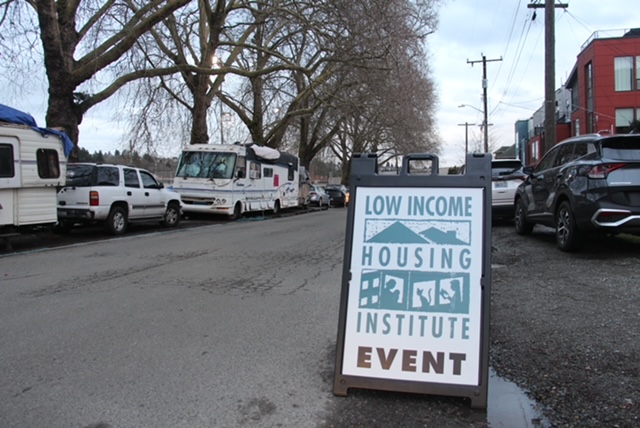
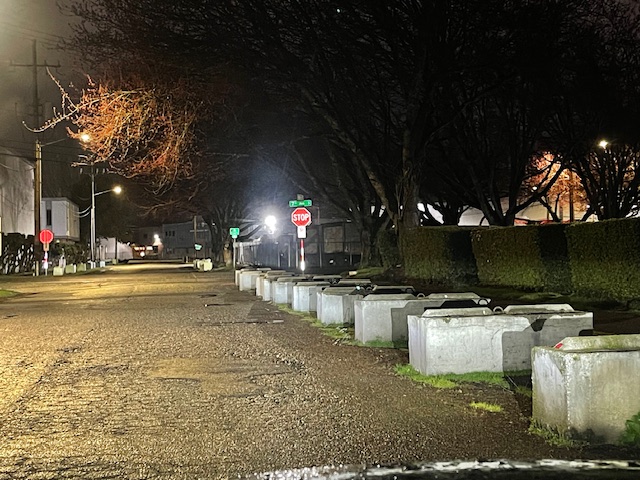
The meeting’s location also provided a visual reminder of the homelessness crisis and its RV tensions along Seattle streets, with RVs parked across South Homer Street from the church, bordering a park – and lines of ecoblocks along properties to the west, a common preventive measure deployed in unofficial attempts to prevent RV parking.
Our full unedited video of the meeting is atop the story; if you don’t have time to watch, here’s our summary.
Marta Kidane, LIHI’s community-engagement leader, emceed. First speaker was the meeting-host church’s pastor Rev. Lawrence Willis, who said he’s worked with LIHI for 15 years, including five years on their board,
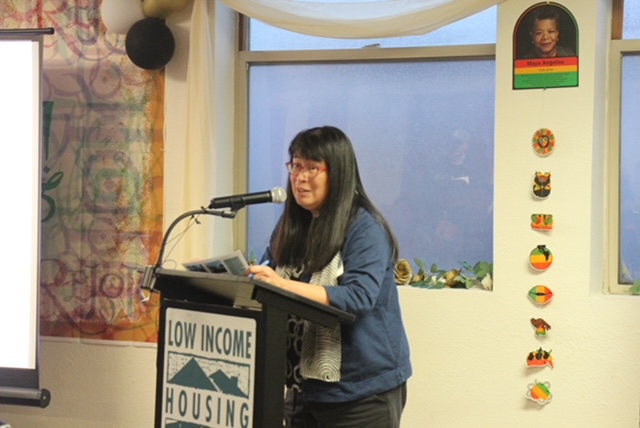
LIHI executive director Sharon Lee said her organization’s current shelter portfolio include 17 tiny-house villages – West Seattle’s Camp Second Chance among them – and five hotel shelters. She touted LIHI’s management of the Salmon Bay Village site for a year and a half, from December 2023 to May 2025 with 28 RVs and 11 tiny houses. (That’s considerably smaller than what’s projected for Glassyard Commons, 72 RVs and 20 tiny houses.) She said Salmon Bay was a success, forced to close because the land owners decided to turn the Interbay site into a pickleball facility.
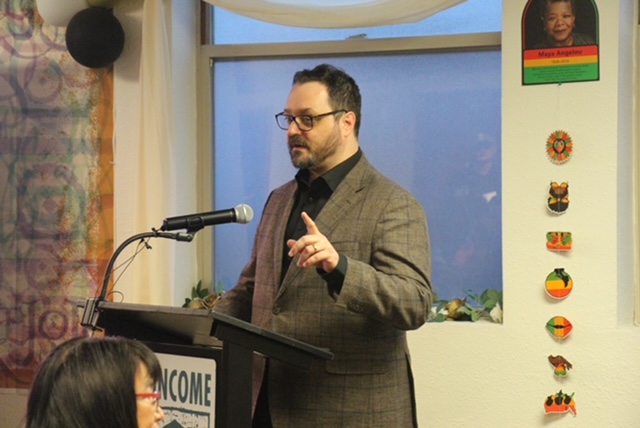
City policy analyst Jon Grant revealed that Glassyard Commons will be the only RV safe lot in the city – for now – and apparently also the only one in King County. “People in RVs are suffering; they want a way to get out of them.” He described the site as a “stepping stone” for vehicle residents to get into permanent housing; the tiny houses will in some but not all cases be a bridge for people, whose RVs will be hooked up to power upon arrival, as well as drained of fluids, and modified so their bathrooms don’t work (they’d use the provided hygiene facilities instead).
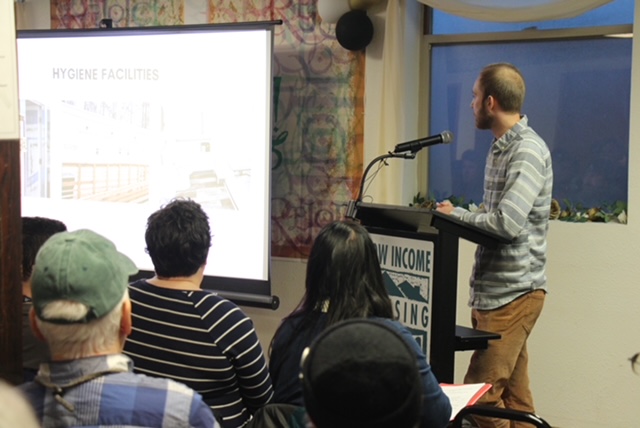
LIHI’s senior construction project manager Matthew White offered more details of the site plan. Since they’re only using part of the WSDOT-owned property, he said, there will be two fences, interior and exterior. All entries will be via the front gate, with 24/7 security (these are paid staff members, Kidane confirmed when we asked, knowing that at sites like CSC security had been the responsibility of resident volunteers). LIHI staffers, including the site manager and three case managers, will have six offices to use. There will also be asphalt paths, security cameras, a kitchen, laundry room, and hygiene facilities with seven showers and eight toilets. And fire extinguishers would be available at least every 75 feet. Also, it’ll have outdoor community areas including smoking zones and picnic tables. Tiny houses, it was noted, all have heating and A/C. As for overall schedule, White said they’re “pushing very hard” to get this up and running in three months.
From operations and case management, Donna Anderson and Victoria Kent discussed details such as “We don’t allow visitors – they can’t come inside or park outside.” (Parking, and even camping, just outside the front gate had been a longtime problem at Camp Second Chance.) Regarding those who fear “this is going to bring crime to the neighborhood,” their contention was “when folks get in and feel safe, they start policing themselves” and even what happens nearby off the premises. Clients will have “individual service plans,” they said, touting that Camp Second Chance has seen 20 housing placements so far this year. Also at the mic were outreach managers Jen Manlief and Jonah Silverstein; they said they’ve been in the area daily, including Highland Park, Westwood, the nearby encampment site cleared on Monday.
The last section of the presentation somewhat dovetailed with Mayor Katie Wilson’s pitch earlier in the week for volunteerism to help with the homelessness crisis. LIHI volunteer manager Amanda Benson said there are multiple ways to support them, including painting and vegetation clearing; Kidane explained the Community Advisory Committee process and again promised one will be set up for Glassyard Commons – email her at marta.kidane@lihi.org
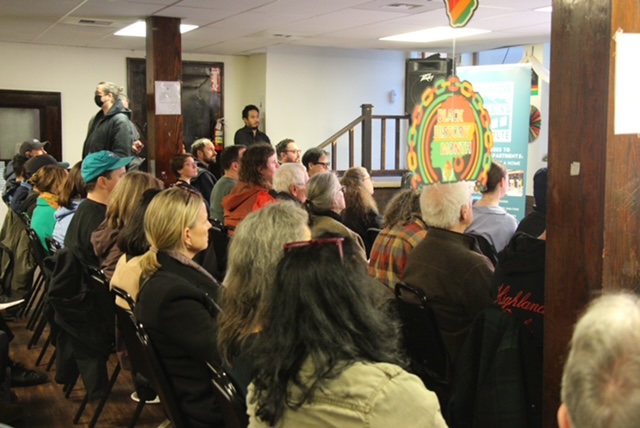
The Q&A period was constrained because, organizers said, they had to end the meeting after an hour because the church had another event scheduled shortly thereafter.
The first questions came from an adjacent property owner who asked about zoning – that’s where the “religious sponsor” information emerged – and contaminated soil on the site; White said they’d see what environmental reports revealed but didn’t seem to worried. Are the every-75-feet fire extinguishers enough? The intent is for them to buy enough time that people could get away from a fire. Other questions included the eligibility requirements; those would include no registered sex offenders, and no one under 18. They are not limiting the RV spaces to vehicle residents who have been in the general area (City Councilmember Rob Saka had previously mentioned some “set asides” but no specifics were offered) – but they expect nearby areas will ultimately see fewer RVs on the street.
Regarding turnover, though, there is no time limit for clients to get out of their RVs: “The goal is for them to come in and go to housing.”
It’s not going to be a completely drug-and-alcohol-free facility, it was disclosed. The only policy regarding drugs and alcohol is that they cannot be used in the public areas. What happens inside individual RVs and tiny houses is not “policed,” said LIHI reps. But recovery services will be available.
Have they done Crime Prevention Through Environmental Design for site planning? White said no, but “we can look into it” – generally their focus has been more on fire safety, and they have an SFD plan for that. Pressed again on the point of crime prevention, they stressed the plan for security staff and that they would have cameras, though no specifics about their location or monitoring plan were offered.
There are 11 businesses nearby – will they be able to visit the site and look around? Kidane promised a tour.
Regarding Glassyard Commons being the only RV lot in Seattle/King County, is that expected to remain true for a while?
Grant replied that “we want to see geographic equity … Our hope is that we can open up more RV programs in the future,” though he indicated they don’t have any target sites yet. “We know we need more.”
WHAT’S NEXT: The construction-permit application for Glassyard Commons remains under review by the city, with more documents filed today, including the full plan set (not available online) and the “religious sponsor MOU” document, which includes more on how the site will be operated