
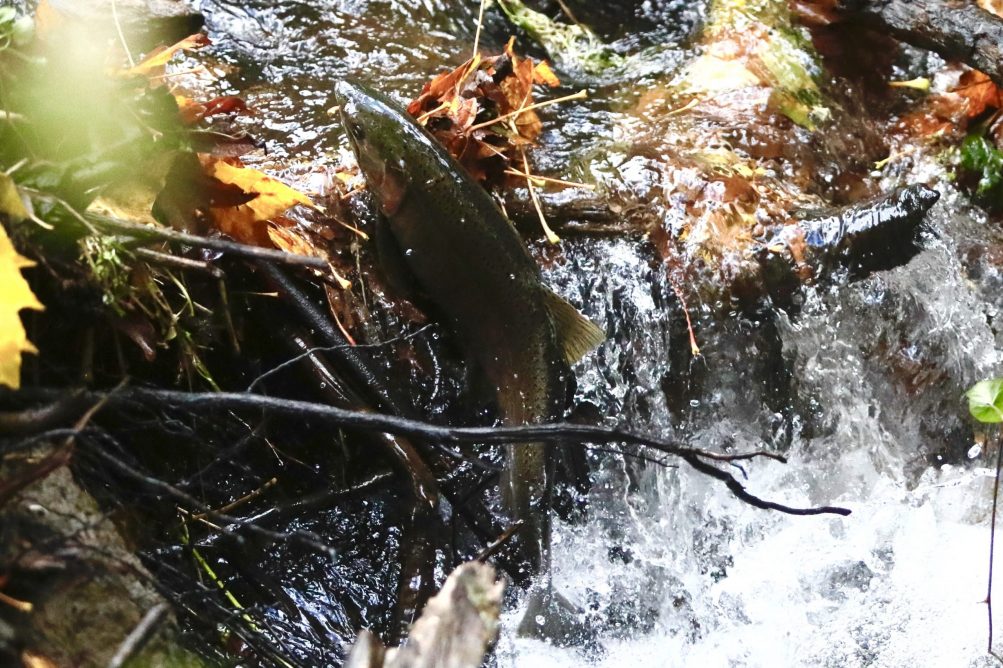
 (October photo of salmon in Longfellow Creek by Manuel Valdes)
Puget Soundkeeper has released its full report on the fall salmon season in Longfellow Creek. It’s been monitoring coho salmon in the eastern West Seattle creek for a decade now, with a focus on gathering data about how urban pollution affects salmon survival. As its announcement explains:
For years, Longfellow Creek has been the epicenter of research studying the effects of 6PPD-quinone – a toxic tire chemical lethal to Coho salmon. Exposure to 6PPD-quinone causes a condition called Urban Runoff Mortality Syndrome (URMS), a disease characterized by symptoms such as disorientation and gasping for air, often killing Coho
within 24 hours. Furthermore, this chemical has been strongly linked to Pre-Spawn Mortality (PSM), where adult salmon die before successfully reproducing. Puget Soundkeeper’s annual Pre-Spawn Mortality Survey analyzes the spawning success of Coho salmon in Longfellow Creek to better understand the impacts of 6PPD-quinone.
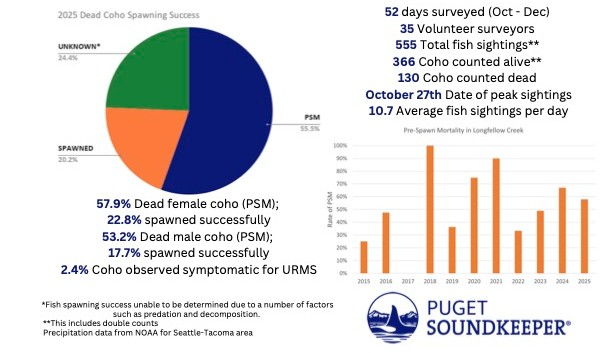
Here’s a one-sheet with results of this year’s survey, conducted from October through December. 55.5% of coho in Longfellow Creek died before spawning, and Puget Soundkeeper says that’s consistent with the data it’s been collecting since 2015 – some years up to 90 percent of the fish died before spawning.
So what can be done? Puget Soundkeeper says:
Fortunately, solutions exist. Green Stormwater Infrastructure (GSI) projects, such as raingardens or bioswales, can effectively remove toxins from runoff and prevent harmful chemicals from entering our waters. In addition to GSI projects, policy action is critical. A bill (HB 2421) aimed at removing 6PPD from tires was introduced to the Washington State House and Senate Environment Committees last week. Community members can help move this legislation forward by calling their representatives and voicing their support. [Here’s how]
Puget Soundkeeper will be recruiting the next cohort of salmon surveyors in August; stay tuned to our website for more information. Puget Soundkeeper thanks all volunteers, partners, and donors who make this project possible.
There are also volunteer cleanups during the season; we reported on one back in November.