
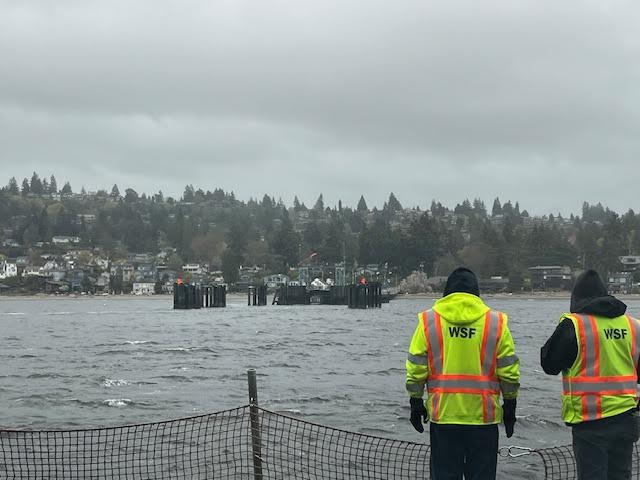
 (Vashon sailing approaching the Fauntleroy terminal, Tuesday)
By Anne Higuera
Reporting for West Seattle Blog
Ferry service for all riders could see some temporary improvements under Washington State Ferries’ plans to adjust while the FIFA World Cup soccer matches and events are held in locations around the Seattle area this summer.
WSF released the annual Service Contingency Plan, as they have for the last several years, outlining progress, challenges, and a framework for how to provide service when something goes wrong. This year’s plan includes a temporary increase to staffing and decrease to response times to breakdowns when they happen during FIFA. One of the keys to making this happen is that maintenance is being scheduled to minimize the number of boats out of service at the same time.
Seattle is a host city for the 2026 FIFA World Cup. Six matches will take place in Seattle, and the region will see significant visitation associated with the event. There are nine “Fan Zones” in Washington state, including one in Bremerton, where fans can gather to watch matches and celebrate. In addition, seven matches will occur in Vancouver, British Columbia, and significant travel between Seattle and Vancouver is expected. We will make several adjustments to our normal contingency framework during the World Cup:
1. Relief vessels. We will have 20 of our 21 vessels available for service during the six weeks of the tournament. With 18 vessels needed to maintain full summer service, this means we will have two vessels available in relief in case a vessel must be removed from service. This will provide us with the flexibility to deploy an appropriate relief vessel if needed. These vessels will be docked at our Eagle Harbor Maintenance Facility.
2. Additional vessel crew. We will have additional crew on standby at Eagle Harbor, where our relief vessels will be positioned, allowing quick response to any vessel-related issue in Central Puget Sound.
3. Additional terminal staff. We will have additional staff at terminals to assist passengers and manage crowds.
4. Relaxing of the “24-hour rule.” Because we will have relief vessels available, and to maintain service on Central Puget Sound routes where the heaviest event-related ridership is likely to occur, we may respond to issues more quickly by deploying a relief vessel. This includes the Seattle/Bremerton, Seattle/Bainbridge Island, and Edmonds/Kingston routes.
The “24-hour rule” usually means a replacement vessel is not assigned until a route is missing a boat for that time frame. The change may mean faster resumption of schedules on routes closest to Eagle Harbor on Bainbridge that have maintenance issues, though response time to the San Juan Islands is still about 6 hours.
This year’s plan pointed to an increase in ridership on the Triangle Route (Fauntleroy-Vashon-Southworth) of 4.7% over the previous year, and included a graph of average loading numbers from a single week in last November when the route had 2 vessels instead of the regular 3. The report said this is the type of data WSF uses to make service decisions. The system overall reached 20.1 million riders in 2025 for the first time at that level since 2019, and 5% more than in 2024. That was accomplished in part by an increase in hiring that made it possible for an additional 7,000 sailings, while cancelling 400 fewer than the previous year.
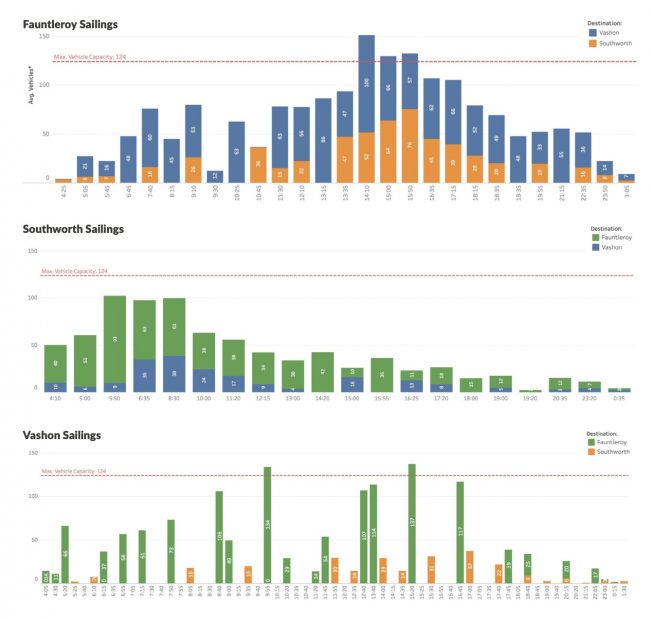
(Average number of vehicles loaded per sailing, week of Nov. 3, 2025)
Another new feature of the contingency plan this year is the “Terminal Contingency Framework,” which outlines most likely steps in the event that a terminal is out of service—either briefly or longer-term—while something is fixed. For the Fauntleroy dock, that is, “No service until repaired or consider moving service to Seattle.” For Southworth, it’s the same with a possibility of moving service to Bremerton. Vashon, with 2 slips and a spot on the dock where a boat is tied up overnight, has more complicated solutions: “If a vehicle slip fails, use other vehicle slip but there will be delays when vessels conflict. Will need alternate for overnight tie-up if one slip is not available.”
The service plan also provided an update on the hybrid-electric ferries that WSF has contracted to have built at Eastern Shipbuilding Group on the Gulf Coast of Florida. They are expecting steel to start being cut for the first boat this summer, with completion in 2030. The plan notes, “With limited vessel availability, we will be unable to operate full service on every route until new vessels are constructed and delivered.”