
By Tracy Record
West Seattle Blog editor
About 30 people gathered at Southwest Library Wednesday night to talk about SDOT‘s plan for a new crossing at Fauntleroy Way SW and SW Rose Street [map].
Most expressed the opinion that SDOT’s concept for the crossing – at the spot where the city removed a painted crosswalk 19 years ago – is overkill.
Most of the concerns centered on the raised median that is planned between the ferry holding lane alongside Lincoln Park and the southbound travel lane of Fauntleroy Way, though there was not a universal agreement on what might be better.
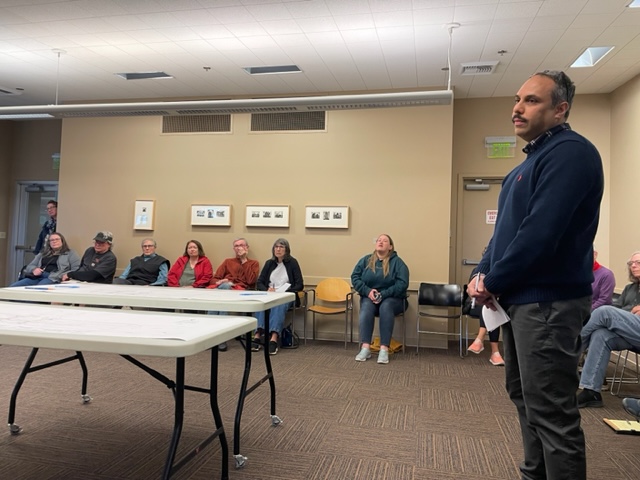
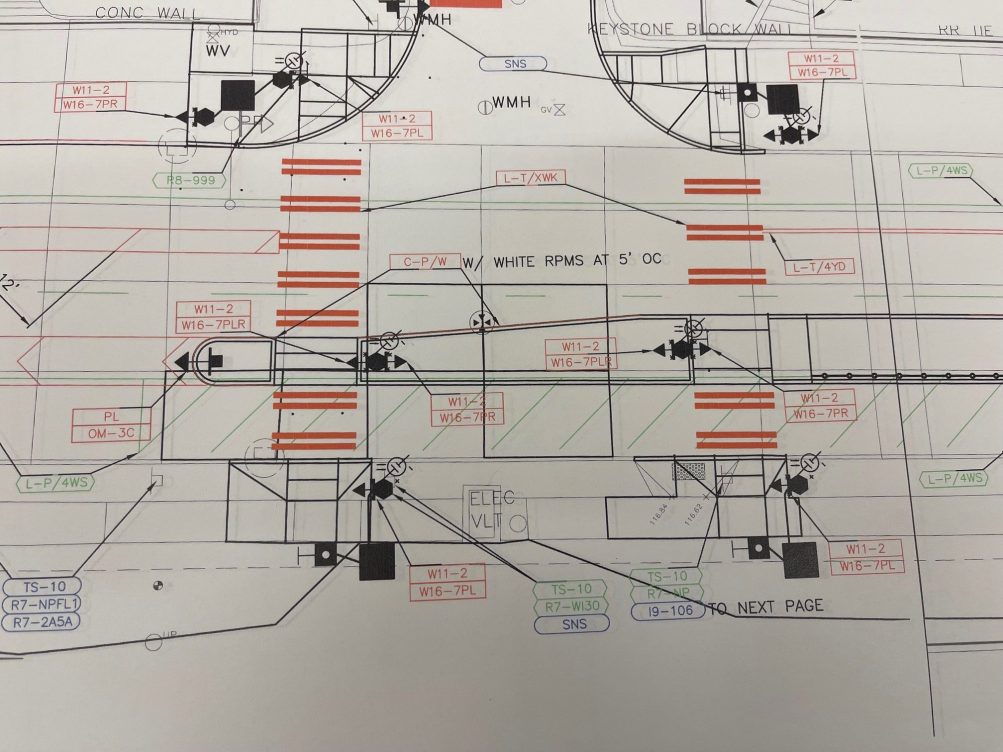
SDOT reps, including chief safety officer Venu Nemani, explained that this is a Transit Spot Improvement project, since the RapidRide C Line stops north of the intersection on the northbound side. They didn’t make a presentation, but rather talked to attendees, seated around the periphery of the room, until breaking into two groups to stand around tables with the sketched-out design, same one unveiled last fall:
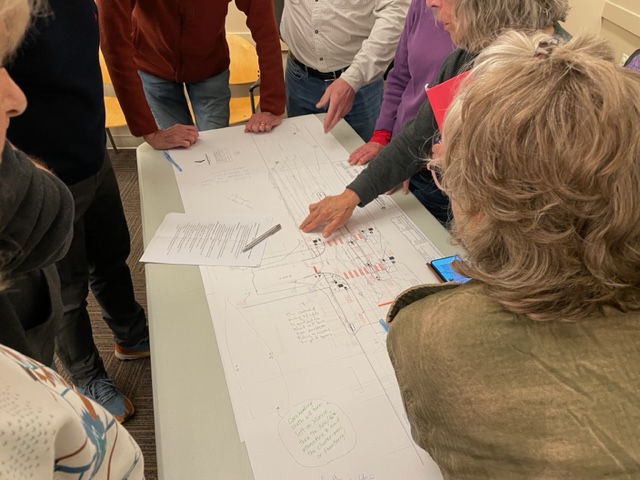
At the start, Frank Immel of the Fauntleroy Community Association – which joined the Morgan Community Association> in organizing the meeting – implored attendees not to “beat up” the SDOT reps, pointing out that while government is often criticized for “not doing anything,” this is a situation in which they responded to community concerns by “doing something.”
SDOT’s Ching Chan noted that this is a rare RapidRide stop without crossing improvements, and described this as a fairly simple project, “quick and low-cost,” and saying there hadn’t been “heavy engagement” with the community because this is about safety “and for SDOT safety is non-negotiable.”
Nemani said traffic data to help with decisionmaking about the intersection was gathered i fall of 2024. That became a point of criticism for some, saying that wouldn’t have been an accurate sampling of how busy the area can get with summertime ferry usage, park usage, etc.
Regardless of traffic-volume accuracy, Nemani noted that many drivers were going well over the 25 mph speed limit. Some area residents seized on that as a concern, worrying that some will zip right through what’s meant to be the holding lane when it’s not full, endangering the pedestrians on the new median, waiting to cross. “Ferry people” rushing to get to the dock were cited numerous times as a source of concern.
And that, Immel observed, is what makes this location different from other places in the city with raised-median crossings – this is the only residential neighborhood in the city with ferry traffic.
Some advocated for the other options Nemani said had been considered – a traffic signal activated by pedestrians, like the one a few blocks south on Fauntleroy, or flashing beacons without a median. He said analysis of the situation in light of the Manual of Uniform Traffic Control suggested it didn’t rise to the need for one of those other options. Then why did other intersections on Fauntleroy have pedestrian-activated signals? he was asked. He said repeatedly that he couldn’t speak for why past SDOT employees made the decisions they did.
Another thing about the median, he noted – it’ll enable more poles to be mounted with the flashing beacons, so the intersection will have more of them. (And if you’re wondering about parking, he said it will lead to the loss of eight spots along Fauntleroy.) For those worried that some drivers would use side streets to avoid this area, Nemani said they could add traffic-calming features to side streets to dissuade or at least mitigate that.
The concerns kept coming: What about the ferry-bound drivers who approach from the south and make U-turns to get into the line? What if a broken-down vehicle blocks the lane between the curb and the median? One person insisted, “The median is not necessary at all.” The meeting ended without a summary, but those on hand had received an hour and a half – 50 percent longer than the meeting’s expected length – to air their fears.
WHAT’S NEXT? Chan told us the feedback will be considered in their final decisionmaking. As for who has the final say, she said Nemani’s input would certainly carry weight. The plan would likely be finalized by midsummer and they hope to start construction by year’s end. We also asked about the project budget; though the cost wouldn’t be clear until they know exactly what they’re building, SDOT’s Aidan Bernal told us that right now the budget is ~$250,000.