
By Anne Higuera
Reporting for West Seattle Blog
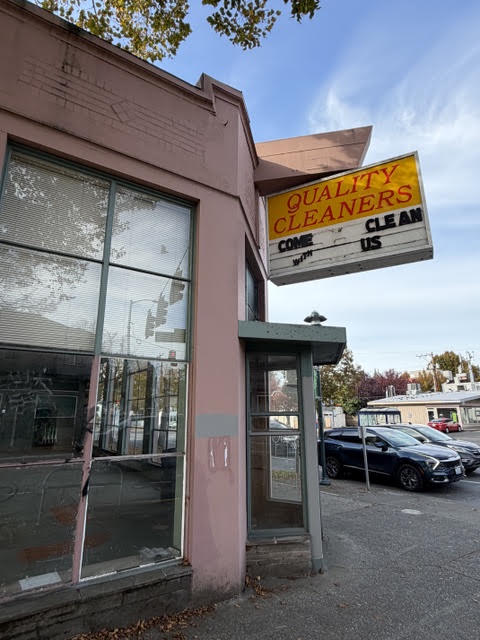
The spinning sign outside the Admiral District’s Quality Cleaners building still says, “Come Clean with Us” as it has for decades. Now the family that owns the landmark storefront at the SW corner of California and Admiral plans to give the soil beneath the building a cleaning of its own after 70+ years as a dry cleaning business.
A reader tip that there seemed to be activity inside the building led us to reach out to the owners. The space has sat empty for a handful of years, with a prominent For Sale sign. That’s now come down. We reported in 2020 when the dry cleaner closed after a death in the family, and there were subsequent efforts to return cleaned clothing to customers. The last notable activity at the building was in early 2023, for what a listing agent called “environmental work.”
“We’ve been working on remediating the soil. That’s why it’s been sitting empty so long,” says family member Ilan Bloom, the son of owner Irene Bloom. He told WSB he is taking the lead for his family on the project, which has turned out to be complex and lengthy. “My mom and aunt didn’t anticipate it taking this long, but we decided since we’ve started this, we’ll finish it.”
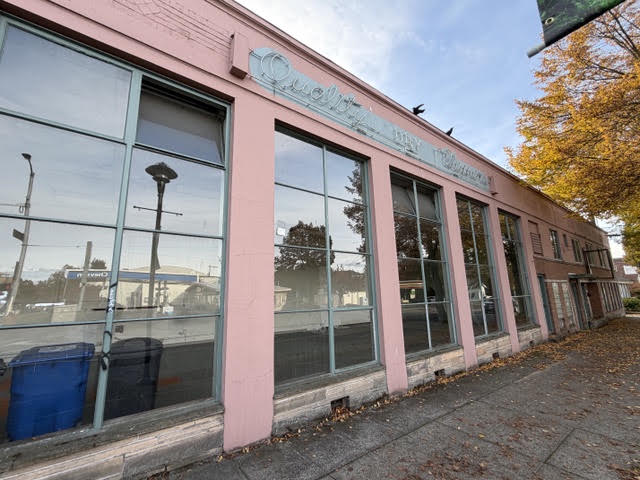
Bloom says after testing the soil in 2021, and finding dry cleaning chemicals, they let their tenants know and, “They vacated the building.” He says the ensuing years have been a process of trying to either sell the property to someone willing to take it on, or figure out a way to afford to do the remediation themselves. “Deal after deal fell through because of how long the process takes,” he says. “It’s extremely costly. … I’m trying to figure out how to get this thing renovated and kept the way it is for the community.”
After years of working with consultants and a contractor that specializes in a vacuum remediation system for this kind of cleanup, Bloom says they are finally at a point where they are working to get the required permits. “We’re starting to see the light at the end of the tunnel. My hope is that sometime around the last quarter of next year will be a time we can occupy the building again.”
Bloom describes the remediation process as one where the building stays in place, and a vacuum tube system is installed under the building to suck up and capture fumes. He says it runs continuously, “until samples come back clean.” The ballpark cost from start to finish: more than $1 million. A recent dry cleaner/gas station site cleanup a couple of miles south by the city’s parks department for the expansion of Morgan Junction’s park included removal and disposal of contaminated soil. That initial construction work, including soil removal, permits, inspections and taxes, was $1.6 million.
While starting to feel optimistic about the timeline, Bloom says there are still federal, state and local processes to complete and permits to get for the work to start. Last summer the state Department of Ecology added the site to their state database of cleanup sites, but Bloom says when he tried to reach out about their Voluntary Cleanup Program, “…they were overwhelmed with applications and unable to accept any new ones.” Now he says he’ll pursue an expedited application to move things along.
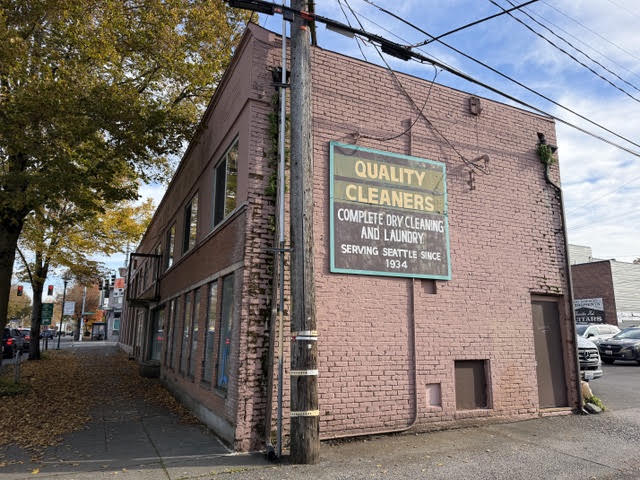
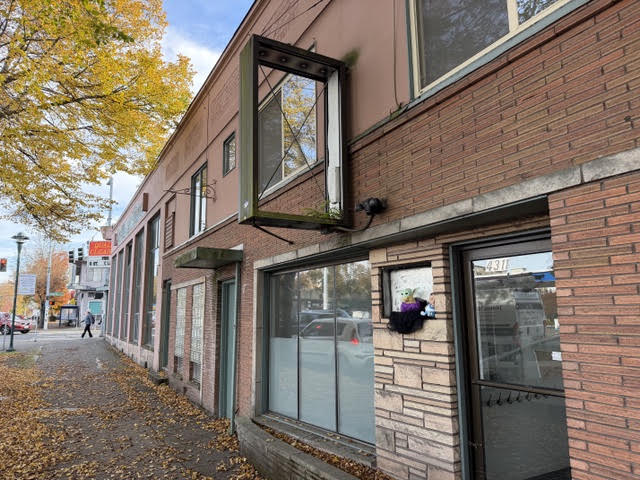
The building, on a long, skinny lot fronting Admiral Way SW and with two addresses—2601 California Ave SW and 4311 SW Admiral–was built in 1916. It’s anchored at the east end by the prominent and eye-catching space the former dry cleaners occupied, with tall ceilings and walls of windows. The balance of the building has another retail space (formerly Max & Quinns Atomic Boys Shop-O-Rama, which closed in 2017) and some residential units. A sign at the West end of the building for Quality Cleaners says “serving Seattle since 1934.” Bloom recalls his family purchased the building in the ’50s. He’s looking at needed updates throughout the building, and open to the possibility of a restaurant, wine bar, or some other place for people to gather in the former Quality Cleaners space once all the work is done.
As the permit process continues, Bloom says to expect to see some maintenance activity around the building. A new roof is on the list, along with some miscellaneous construction work. All of this is an expense for a building that’s not generating revenue and hasn’t for years, and with the remediation cost an open question. “We don’t exactly know because it keeps changing.” He says he’s learned that often in these situations, the remediation cost exceeds the value of the building, so the property is left with an empty building or an empty lot. He was unable to find any incentives or grant funding to make it pencil out. That means an owner has to be committed for some reason other than profit to follow through. “I’d really like this to go back to being a community asset,” says Bloom. “We’ll work with what we’ve got here and make it eventually happen.”